Looking for personal branding examples you can learn from? This guide looks at three real people with strong personal brands, Seth Godin, James Clear and Marie Forleo, and the simple habits behind each one that you can copy.
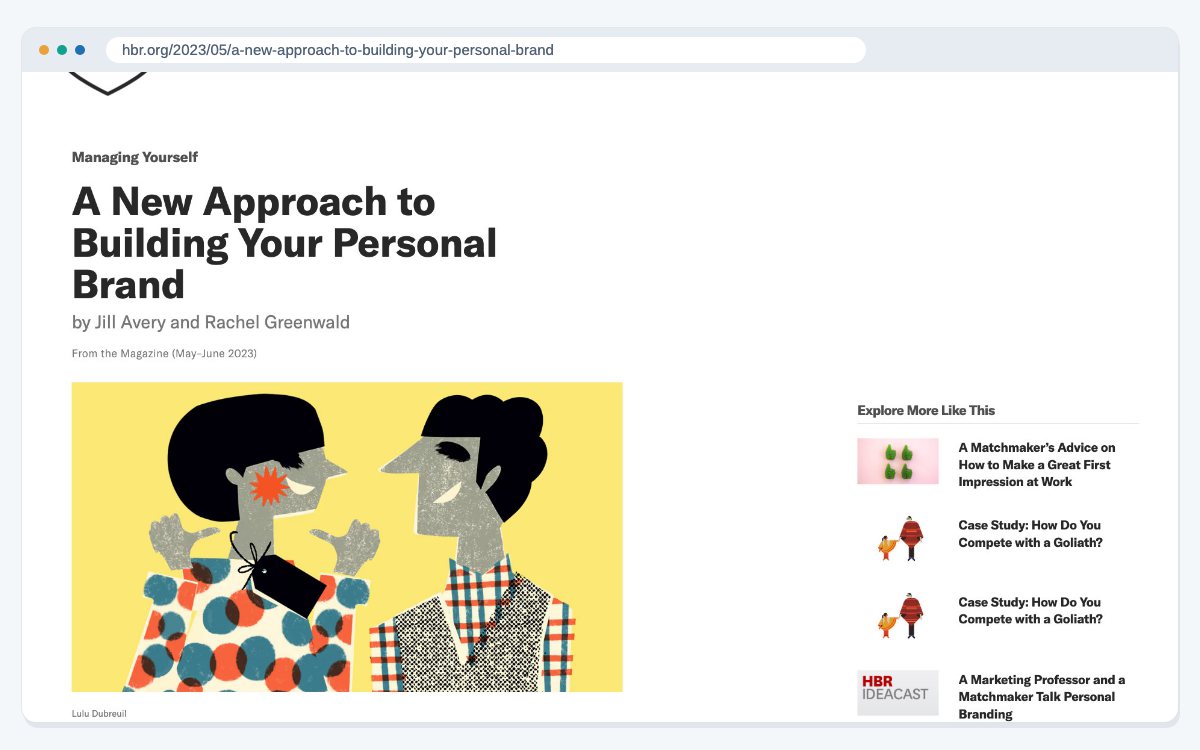
A personal brand is what people think of when they hear your name: what you know, what you stand for and why they should trust you. In a 2023 Harvard Business Review article, Jill Avery and Rachel Greenwald argue that everyone is now a brand, whether they are applying for a job, going for a promotion or looking for new clients.
What makes a strong personal brand
The best personal brands are not about logos or clever taglines. They usually share a few plain traits:
- One clear topic: people can say in one sentence what you are known for.
- A steady habit: you show up in the same place, on a regular schedule.
- Proof: books, courses, work samples or results that back up what you say.
- A real voice: you sound like a person, not a press release.
- A home base: a website or email list you own, not only social media profiles.
Together, these traits are the personal version of a brand strategy: a clear idea of who you help and why they should choose you. Each example below is strongest in a different one of them.
Example 1: Seth Godin (a daily habit)
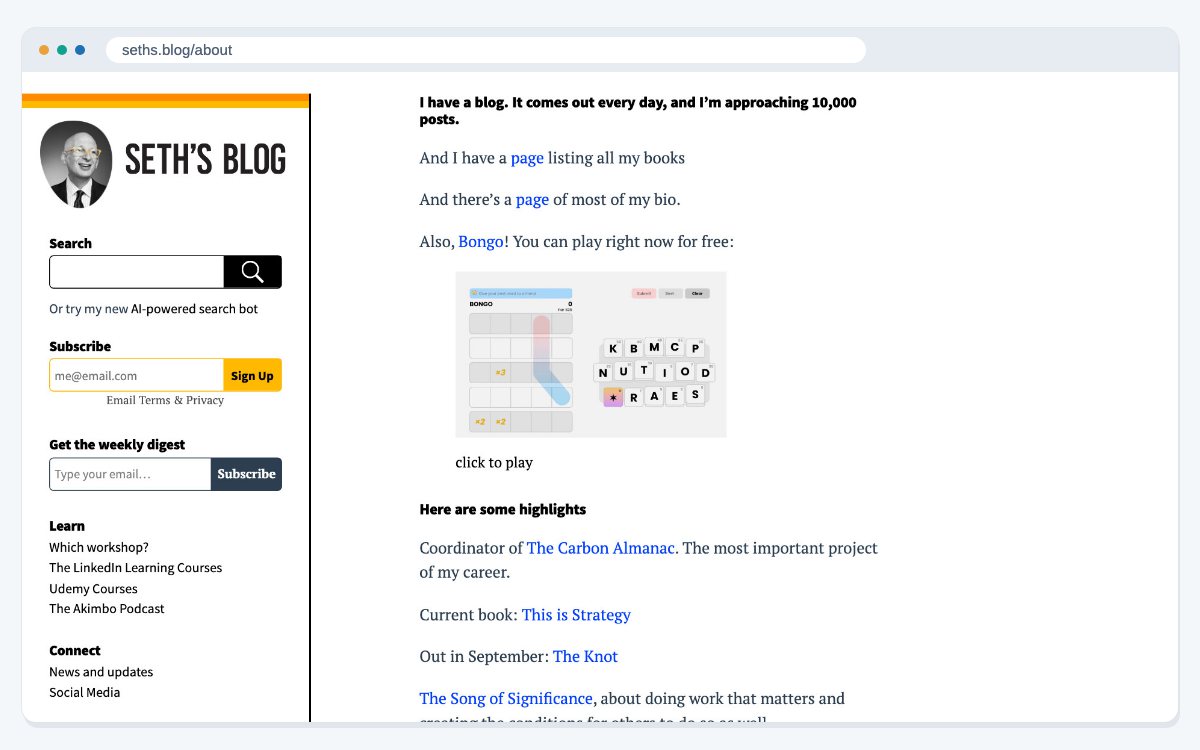
Seth Godin is a marketing author. On his own site, he says his blog comes out every day, has appeared daily for more than a decade, and is approaching 10,000 posts (checked on 19 October 2026). He has written many books, such as This Is Marketing and The Practice. In 2015 he created the altMBA, a 30-day online workshop; his site says its leaders wound it down in 2024.
What to copy: pick one format and one schedule you can keep for years. A short post every week, kept up for a long time, builds more trust than a burst of posts that stops after a month.
Example 2: James Clear (one clear topic)
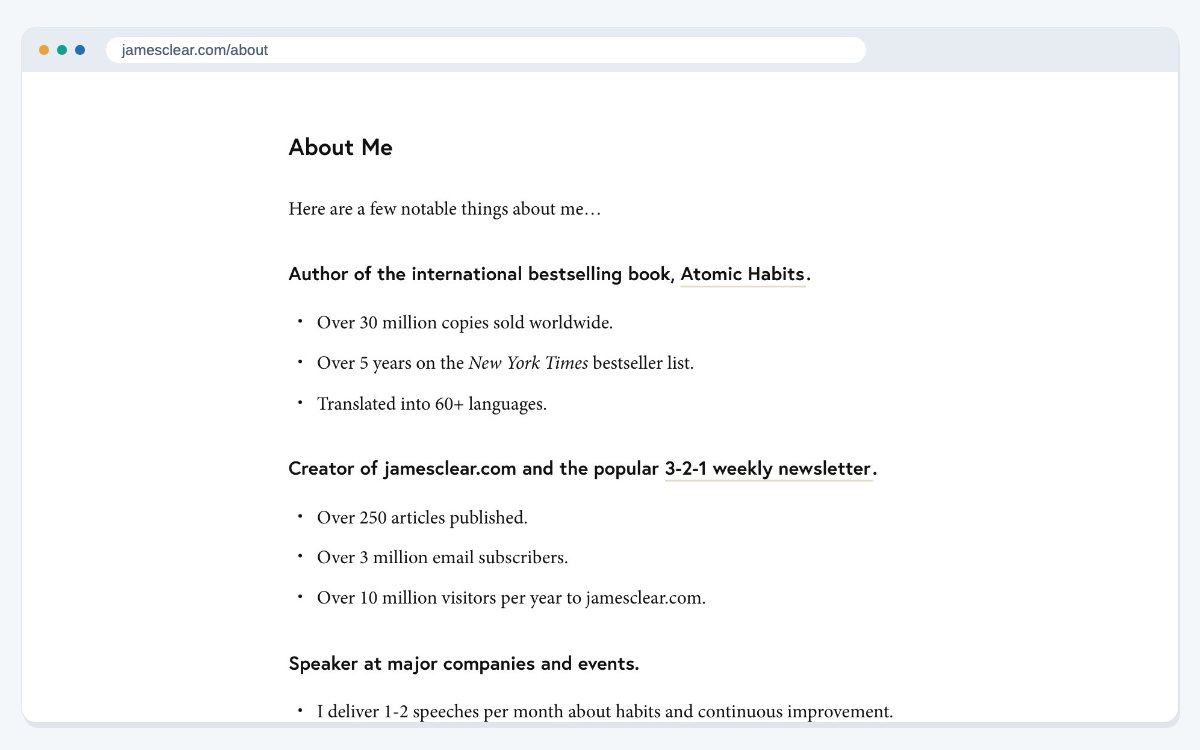
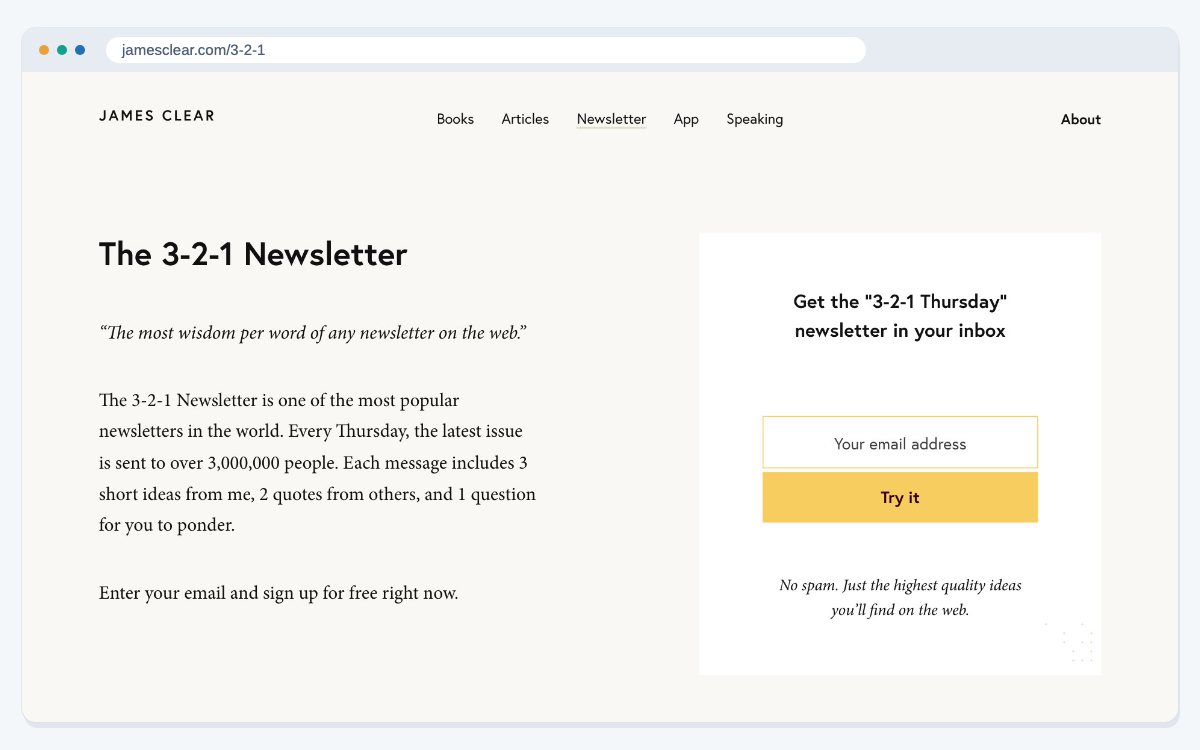
James Clear has written about habits, decision making and continuous improvement since 2012. His about page describes Atomic Habits as a number one New York Times bestseller that has sold more than 30 million copies, and says his weekly 3-2-1 newsletter goes to more than 3 million subscribers (both checked on 19 October 2026). Almost everything he publishes ties back to the same theme: small habits and good systems.
What to copy: choose a narrow topic and stay with it. When every post, talk and product points the same way, people remember you and can tell others what you do. It also makes it easier for search engines and AI assistants to link your name to your topic, which is the idea behind entity SEO.
Example 3: Marie Forleo (a home base with many channels)
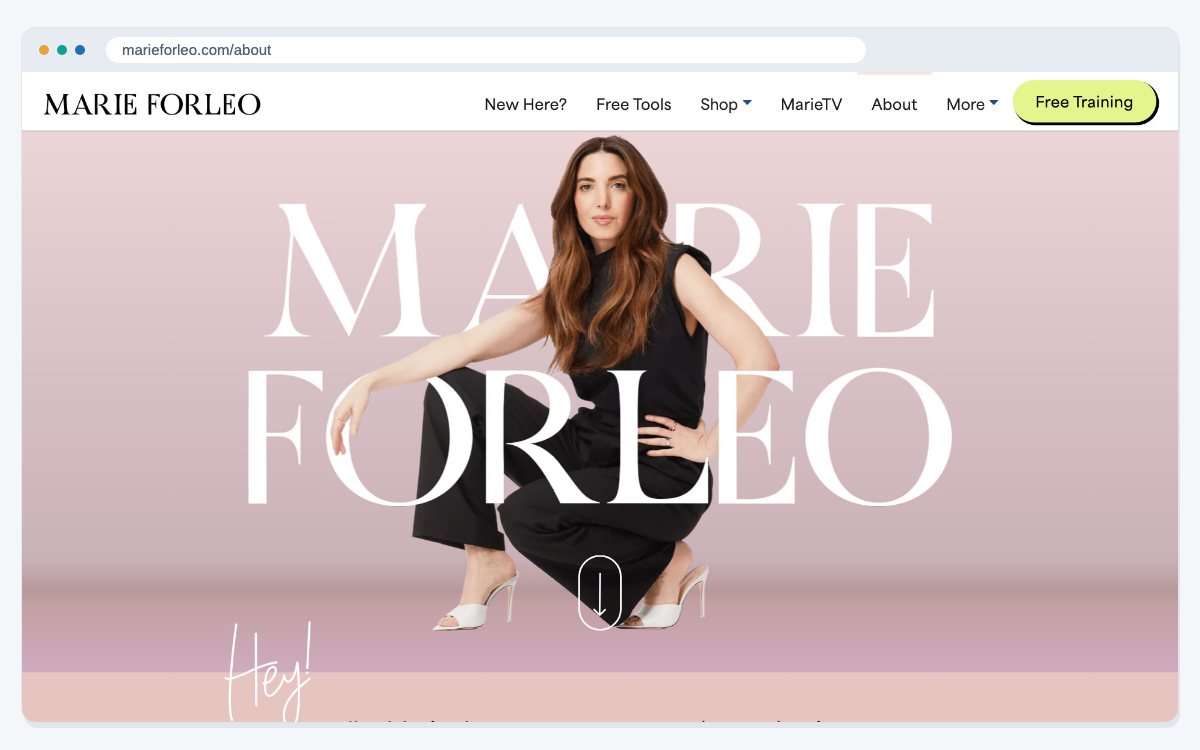
Marie Forleo describes herself on her about page as an entrepreneur, speaker and writer. She has an award-winning show called MarieTV, a podcast, a number one New York Times bestselling book called Everything is Figureoutable, and B-School, her course for building a business, which her site says has nearly 80,000 students. She also says she coined the term "Multipassionate Entrepreneur". All of it points back to one website.
What to copy: use many channels if you want, but send people to one home you own, such as your website or email list. Social platforms change their rules. Your own site and list stay yours. If you don't have that home yet, our guide on how to design a website from scratch walks through it step by step.
The three brands side by side
Put the three next to each other and the pattern is clear. Each person has one main idea, a habit they have kept for years, and proof that other people value the work. The numbers come from their own websites, so treat them as self-reported.
None of them relies on a logo to stand out. A clean, consistent look still helps people recognise you, and a simple brand identity is enough for most people who are starting out.
How to build your own personal brand
You don't need a big audience to start. A first plan can look like this:
- Write one sentence about who you help and how.
- Pick one main channel, such as LinkedIn, a blog, a newsletter or video.
- Set a schedule you can keep, even if it is once a week.
- Collect proof: work samples, case studies and reviews from real clients.
- Build a simple website with your story, your work and a way to contact you.
- Look back every few months and adjust what isn't working.
If other people write or design for you, put your voice and look on one page, the way companies do in their brand guidelines.
Keep your own voice
Learn from these examples, but don't copy their style. Pick a topic narrow enough that people can repeat it, a pace you can keep when you are busy, and words that sound like you. Posting less often but steadily builds more than a burst of posts that stops.
If you would like help shaping your story, your look and your online home, our personal branding consultant service can work through it with you.
Frequently asked questions
Seth Godin, James Clear and Marie Forleo are well-known examples. Each one is known for a clear topic, shows up regularly and sends people to a website they own.
Write one sentence about who you help and how, pick one main channel, post on a schedule you can keep, and build a simple website that shows your work.
It helps a lot. Social profiles are useful, but a website is a home you control, where people can read your story, see your work and contact you.
There is no set time. All three examples above have kept the same topic and habits for many years, which is a big part of why people know them.
A personal brand is tied to one person's name, skills and voice. A company brand belongs to the business and can carry on when people join or leave.
There is no single best platform. Choose the one where the people you want to reach already spend time, and one you can keep posting on for years.
As often as you can keep up for a long time. Seth Godin blogs every day and James Clear sends a weekly newsletter, but a steady monthly post is better than a daily habit you drop.
Not to start. None of the three examples relies on a logo. Consistent colours, fonts and a good photo of you are usually enough at first.
It can. For founders, consultants and freelancers, people often meet the person before the company. A clear personal brand makes you easier to remember and to recommend.
Look at signs you can count, such as email subscribers, enquiries that mention your posts, and invitations to speak or write. Review them every few months.
Sources
- Harvard Business Review: A New Approach to Building Your Personal Brand (Avery and Greenwald, May to June 2023 issue)
- Seth Godin: About (checked 19 October 2026)
- James Clear: About (checked 19 October 2026)
- Marie Forleo: About (checked 19 October 2026)
Last updated: