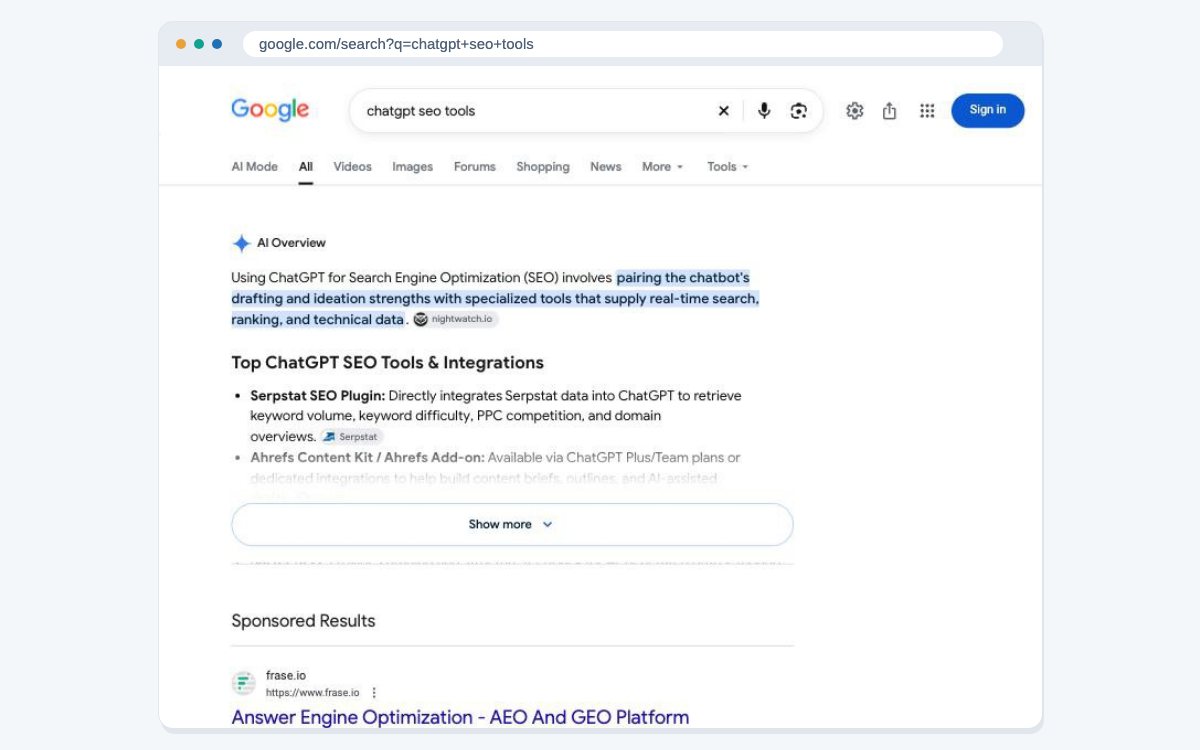
ChatGPT SEO tools are the apps and habits that let you use ChatGPT for SEO work with real data behind it. On its own, ChatGPT is good at drafting, sorting and explaining. Connected to an SEO platform, it can also look up keyword and ranking data while you chat.
This guide covers how apps work in ChatGPT, the official Semrush and Ahrefs apps, what to use ChatGPT for, and the Google rules that apply to anything it helps you write.
What people mean by ChatGPT SEO tools
The phrase covers two things:
- SEO apps inside ChatGPT: official apps from SEO platforms that let ChatGPT pull their data into the conversation.
- ChatGPT as a writing and planning tool: using the chat to draft outlines, titles, meta descriptions and summaries that you then check.
The first gives ChatGPT real numbers to work with. The second saves time on the words. Both still need a person to check the result before it goes live. If AI and search are new to you, our overview of AI SEO services explains how the pieces fit together.
How apps work in ChatGPT
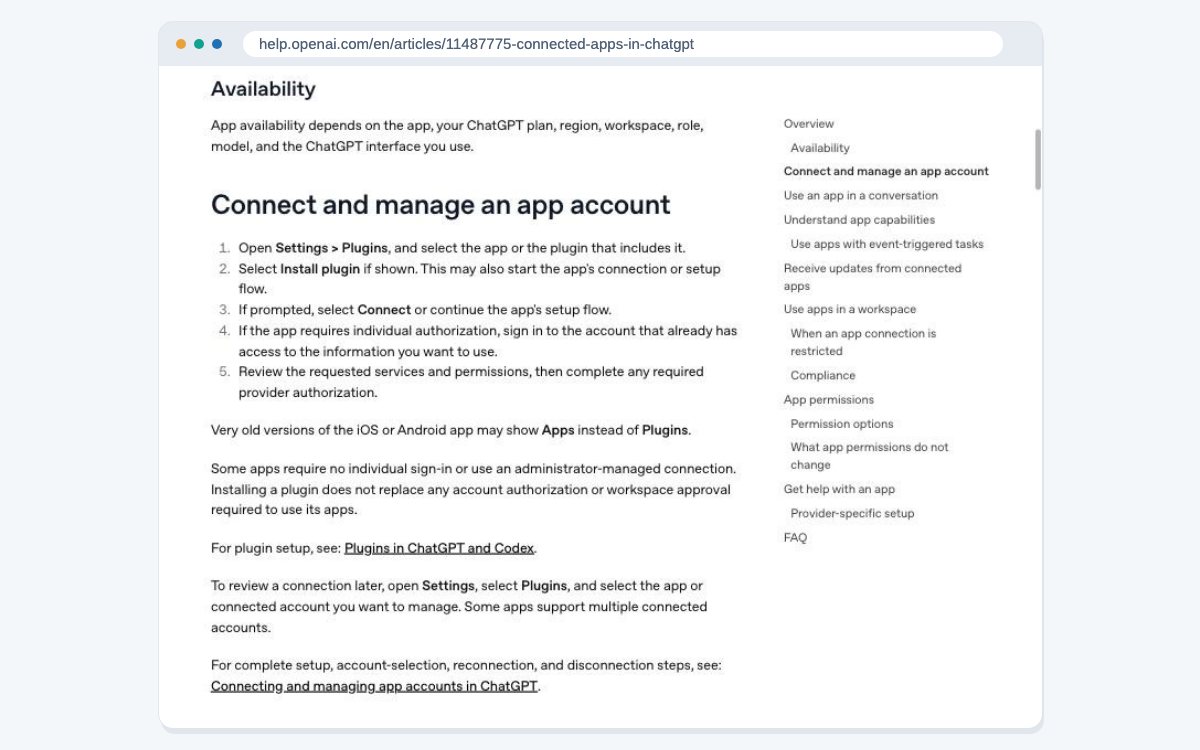
OpenAI's help article on connected apps explains the basics (checked on 22 October 2026). Apps connect ChatGPT to services you already use, so you can work with their information in a conversation. You add one in Settings, under Plugins, and sign in to your account with that service if asked.
In a chat, you mention the app with @ or pick it from the + menu. ChatGPT may ask for your approval before it reads information or takes an action. OpenAI notes that which apps you can use depends on the app, your ChatGPT plan, your region, your workspace and the interface you use.
The Semrush app in ChatGPT
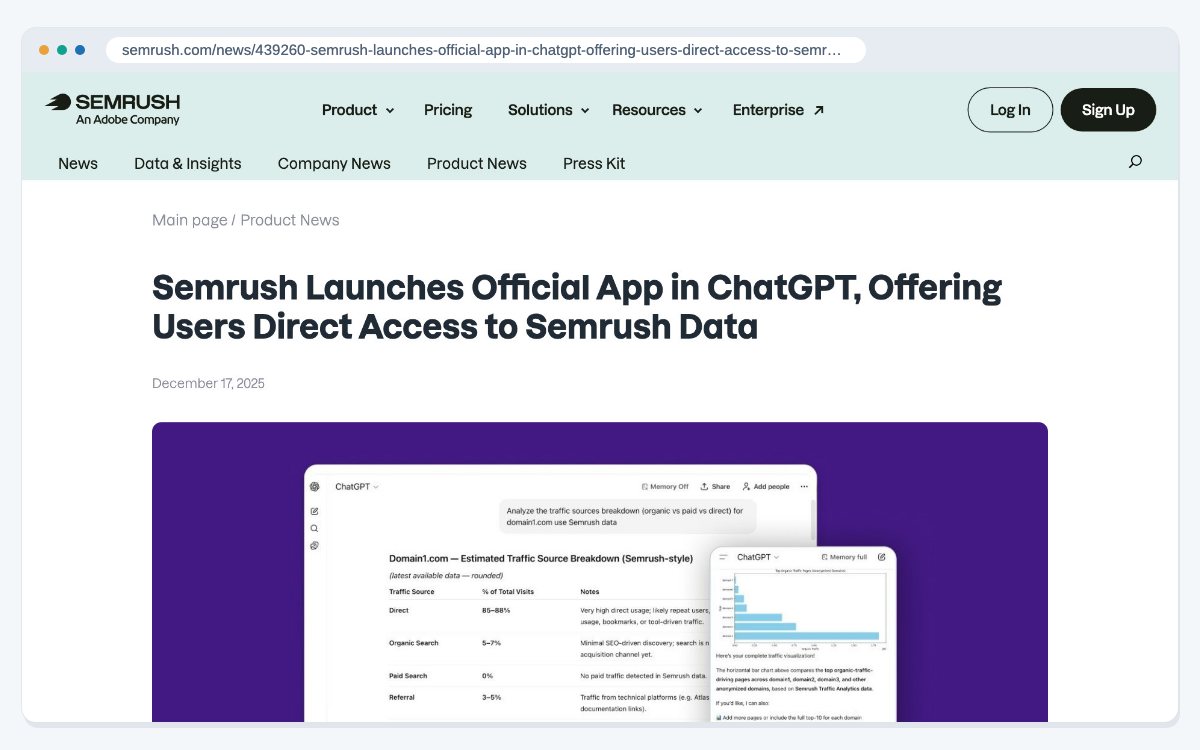
Semrush announced its official app in ChatGPT on 17 December 2025. It lets Semrush customers use live Semrush data inside ChatGPT after signing in to Semrush once. The announcement lists uses such as:
- Pulling traffic, ranking and visibility numbers for competitors on demand.
- Building content briefs from keyword clusters and gap analyses.
- Putting together recurring SEO reports from live data.
Semrush says the app can be used by its customers on ChatGPT Enterprise, EDU, Business, Pro and Plus plans, and that availability may vary by region.
The Ahrefs app in ChatGPT
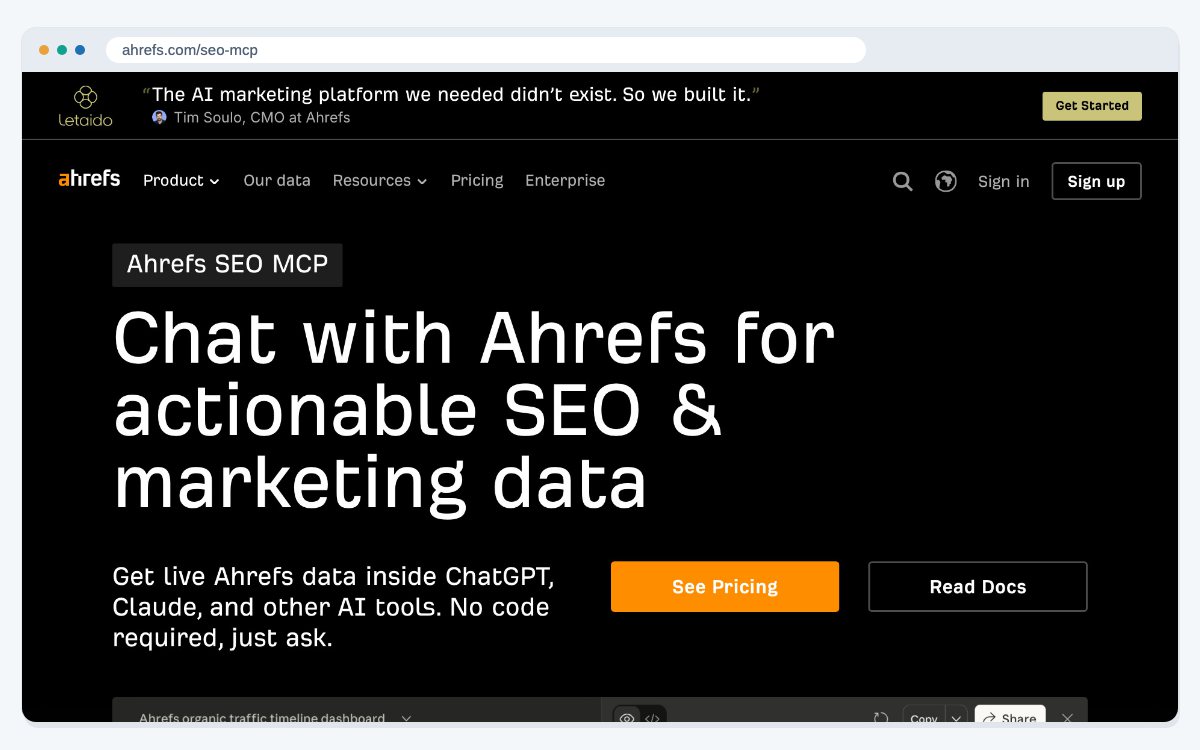
Ahrefs offers its data to AI tools through the Ahrefs SEO MCP, which works with ChatGPT (checked on 22 October 2026). In ChatGPT, you mention @Ahrefs and ask for what you need. Ahrefs lists keyword data such as search volume, traffic potential, growth trend and keyword difficulty, plus organic traffic trends, backlink data and competitor comparisons.
Ahrefs says it is included on its paid plans, from Lite up to Enterprise, and that your plan decides how much data you can pull per request.
What ChatGPT is good for in SEO work
With or without an app, ChatGPT can take a lot of slow work off your hands:
- Outlines: turning a keyword list and your notes into a draft structure.
- Titles and descriptions: writing several options so you can pick and edit the best one.
- Summaries: condensing long reports, reviews or call notes into points you can act on.
- Structured data drafts: writing a first version of schema markup, which still needs a technical SEO check.
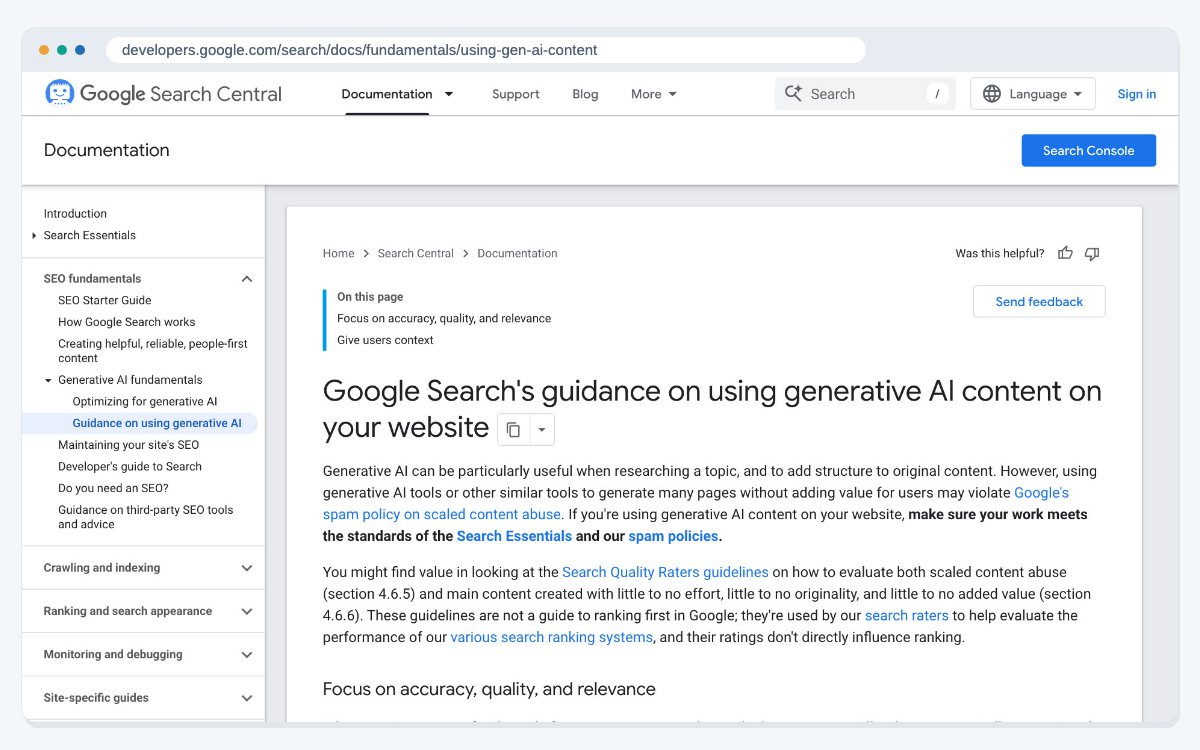
Google's guidance on using generative AI content (last updated 1 October 2026) says generative AI can be particularly useful when researching a topic and adding structure to original content. It also warns that generative models don't retrieve facts but predict a likely sequence of words, so their output can contain errors. Google calls it critical to fact-check and review all AI-generated content before publishing, including titles, meta descriptions, structured data and image alt text. For the deeper work of making content clear to AI systems, see our page on AI content optimization.
Stay inside Google's spam rules
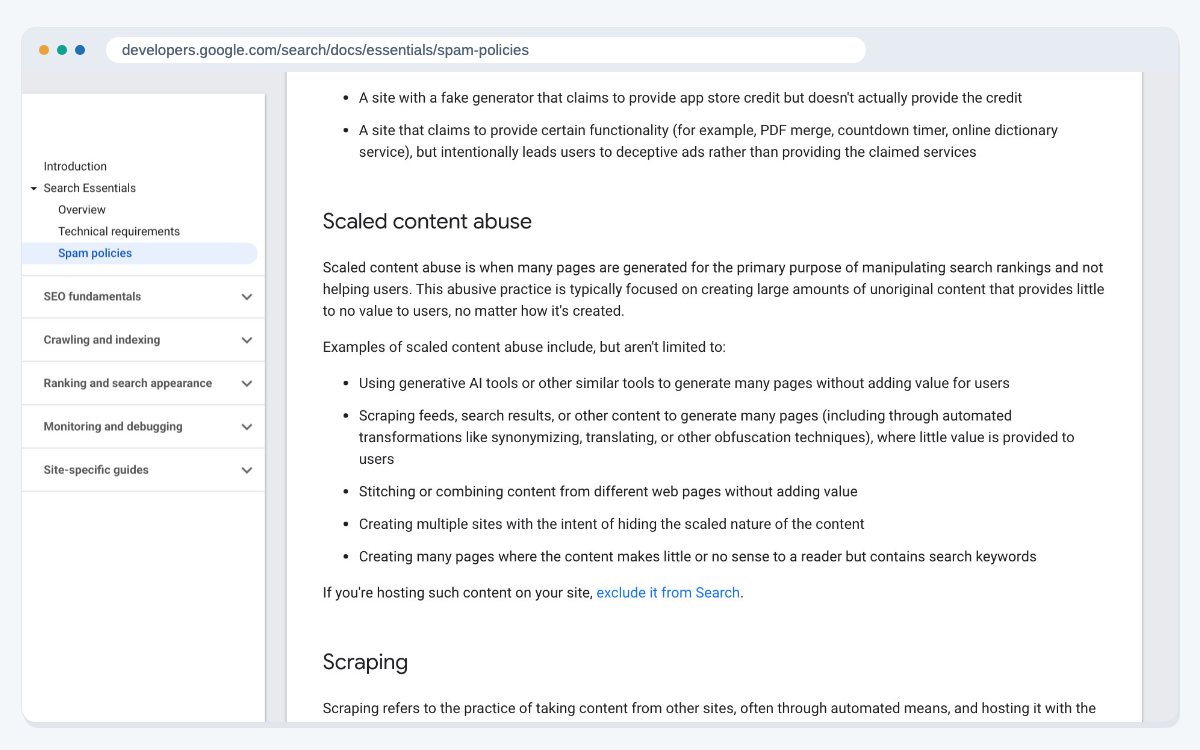
The biggest risk is volume. Google's spam policies (last updated 28 August 2026) define scaled content abuse as many pages generated mainly to manipulate search rankings rather than to help users, no matter how they are made. The first example Google gives is using generative AI tools to generate many pages without adding value for users.
So use ChatGPT to work faster on pages that deserve to exist, not to publish more pages than you can check. Every page should still have a clear purpose, accurate facts and something useful for the reader. An AI SEO audit can show where thin or repeated pages are holding a site back.
A simple ChatGPT SEO workflow
Here is one way to put it together for a single page:
- Pull keyword and competitor data with the Semrush or Ahrefs app, if you use one.
- Ask ChatGPT for an outline that answers the main question in the first lines.
- Write the page yourself, or edit the draft heavily, adding your own examples and facts.
- Ask ChatGPT for title and meta description options, then edit them.
- Check every fact, link and number against its source before you publish.
The basics of a good page don't change: a clear title, useful headings and a short, honest description, as covered in how to design a website from scratch.
Getting ChatGPT to mention your brand
Using ChatGPT for SEO work is one side. The other is showing up in ChatGPT's own answers when people ask about your field. Clear pages that AI systems can read and cite give you the best chance, which is the focus of generative engine optimization. OpenAI also says sites that block its search crawler, OAI-SearchBot, won't appear in ChatGPT search answers, so check your robots.txt.
If you want help with both sides, our ChatGPT SEO services can set up the tools and the work with you.
Frequently asked questions
They are official apps from SEO platforms that bring their data into ChatGPT, such as the Semrush and Ahrefs apps, and the ways you use ChatGPT itself for SEO tasks like outlines and meta descriptions.
With an SEO app connected, it can pull keyword data such as search volume and keyword difficulty from that platform. Without one, check any numbers it gives you in an SEO tool before you rely on them.
OpenAI's help article says to open Settings, select Plugins, choose the app and connect your account if asked. Then mention the app with @ in a chat or pick it from the + menu.
Semrush customers on ChatGPT Enterprise, EDU, Business, Pro and Plus plans, according to Semrush's announcement. It also says availability may vary by region.
Ahrefs says its SEO MCP is included on Lite, Standard, Advanced and Enterprise plans, and your plan sets how much data you can pull per request.
Not by itself. Google's guidance says generative AI can help with research and structure, but the content still has to be accurate and helpful, and AI-generated content should be checked before it is published.
It is Google's term for generating many pages mainly to manipulate rankings rather than help users. Using generative AI to create many pages without adding value is the first example in its spam policies.
It can draft options quickly. Google's guidance says to review AI-generated metadata such as titles and meta descriptions for accuracy before publishing, so edit them first.
For data, yes. ChatGPT is good with words, while SEO platforms hold keyword, ranking and backlink data. The Semrush and Ahrefs apps exist to bring that data into the chat.
Not directly. Being cited depends on how clear and useful your pages are, and OpenAI says sites that block OAI-SearchBot won't appear in ChatGPT search answers.
Sources
- OpenAI Help Center: Connected apps in ChatGPT (checked 22 October 2026)
- Semrush: Semrush launches official app in ChatGPT (17 December 2025)
- Ahrefs: Ahrefs SEO MCP (checked 22 October 2026)
- Google Search Central: Guidance on using generative AI content (last updated 1 October 2026)
- Google Search Central: Spam policies for Google web search (last updated 28 August 2026)
- OpenAI: Overview of OpenAI Crawlers (checked 22 October 2026)
Last updated: