Web Design Services
A Headless CMS Development Company for Custom Front Ends
We are a headless CMS development company that builds custom front ends on top of a commerce platform and a content system. In a headless setup, the part shoppers see is separate from the backend that stores products, orders and content. That split gives you more control over speed and design, but it also adds cost and complexity. We help you decide if it is worth it, then build it properly.
Price
In your free proposal
Based on your goals and scope
Part of
Proposal
Free
Plan and price in writing
What headless means in practice
In a standard store, the platform's theme renders every page. In a headless store, a separate front end, often built with Next.js or Shopify's Hydrogen, pulls data from APIs and renders pages itself. Products and checkout stay in Shopify, BigCommerce or another commerce engine. Editorial content often lives in a headless CMS such as Contentful, Sanity or Storyblok.
The result can be faster pages, richer content layouts and one front end that serves several stores, regions or apps. The cost is a second system to build, host and maintain.
Who should consider headless commerce services
Headless commerce services make sense for brands that have outgrown theme limits or run content-heavy shopping experiences. They also suit brands that sell across several regions or channels, or need speed a theme cannot reach.
They are usually not worth it for a new store or a small catalog. A well-built theme on Shopify or another platform will be cheaper to run. We will tell you if that is your situation, even if it means a smaller project for us.
Our headless CMS development services
A typical project includes:
- Architecture plan – We choose the commerce backend, CMS, front-end framework and hosting, and document how data flows between them.
- Content modeling – We set up content types in the CMS so editors can build pages from approved components.
- Front-end build – A component-based storefront with server rendering, image optimization and caching.
- Commerce integration – Product, cart, customer and checkout connections through platform APIs such as Shopify's Storefront API.
- SEO and tracking – Metadata, structured data, sitemaps, redirects and analytics events built into the front end.
- Preview and publishing – Live preview so editors see changes before they publish.
Working with a headless Shopify agency
Many of our headless projects run on Shopify. As a headless Shopify agency, we build with Hydrogen or Next.js against the Storefront API and keep Shopify's own checkout. Your team still manages products, orders and discounts in the Shopify admin.
We plan the parts that often get missed: how apps that expect a Shopify theme will work, how editors preview pages and how redirects carry over from your old store.
Cost, timeline and what we will not promise
Headless builds cost more than theme builds, both upfront and to run. Cost depends on the number of templates, CMS complexity, integrations and how many stores or regions share the front end. You get a clear price in your free proposal, after we look at your goals.
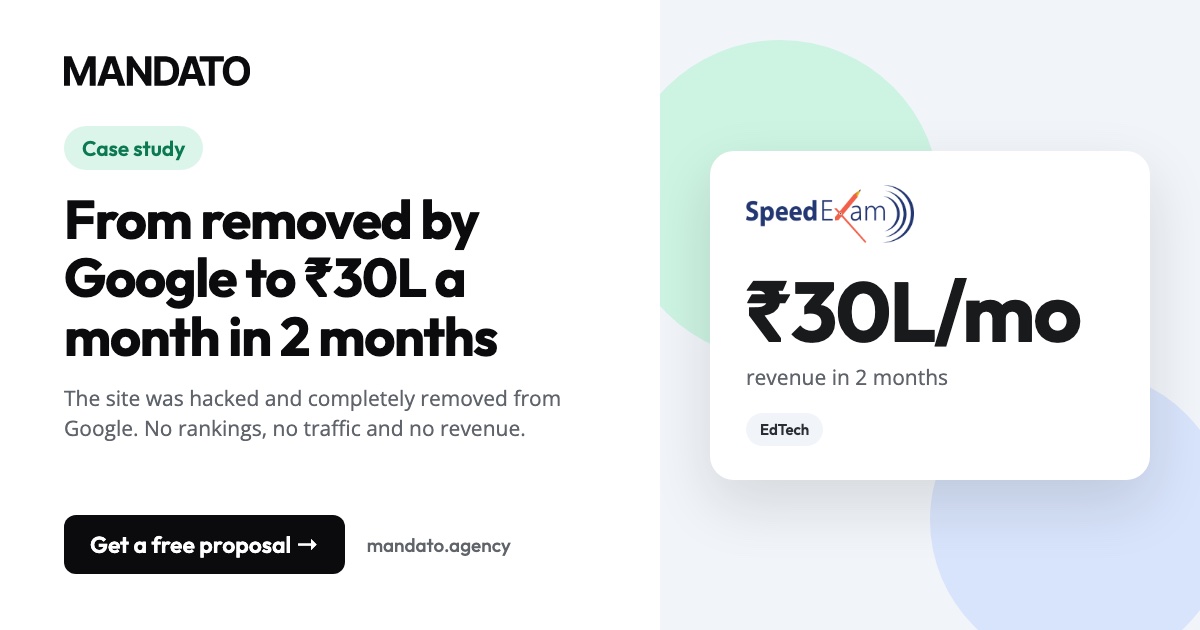
See our Speed Exam case study. We will not promise a set speed score or sales lift. We will set speed targets with you, measure them before and after and report honestly. See all our web design services.
Last updated:
Results
Before and after: proof from client work
Screenshots from client accounts. Each caption says only what the screenshot shows.
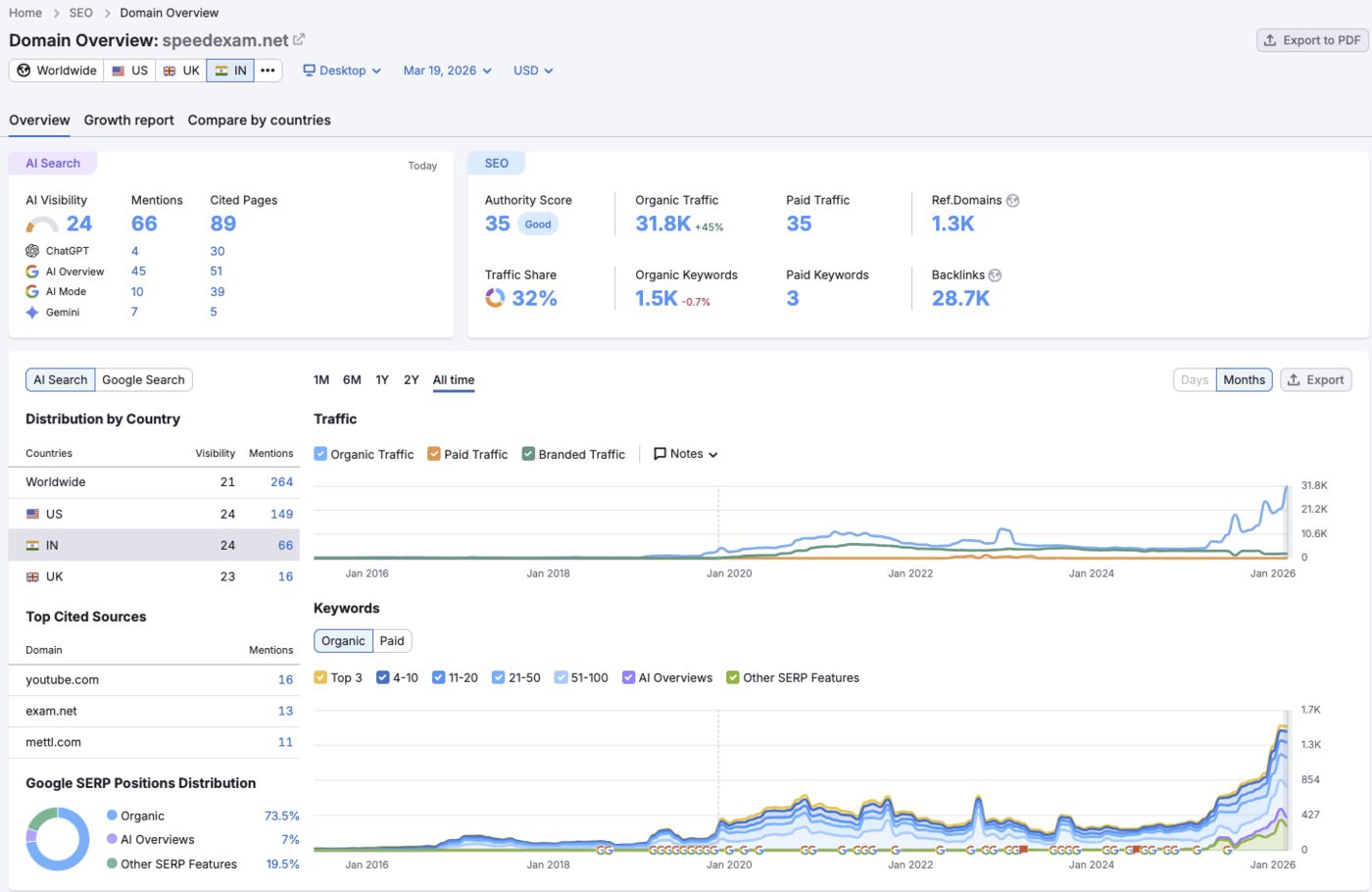
SpeedExam
31.8K monthly organic traffic, up 45%.
Source: Semrush, India, 19 Mar 2026
Case studies
Related case studies
Results from our Web Design Services work.

FAQ
Headless CMS Development Company: questions
It can be, because the front end loads only what each page needs and can be cached at the edge. A poorly built headless site can still be slow, so speed depends on the build, not the label.
Yes, if the CMS is set up well. We model content as reusable components and add live preview so editors can build and check pages without a developer.
Apps that work through the backend, such as inventory or fulfillment, usually work. Apps that inject code into a theme often do not, and need a replacement or custom integration. We review your app list early.
It depends on your team and content. Contentful, Sanity and Storyblok are common choices, and Shopify's own metaobjects can work for simpler needs. We compare options during planning.
Often, yes. Some brands start with headless content pages and keep the theme for product and checkout pages, then move further later. We can plan a phased approach.
Related services
Get a free Headless CMS Development Company proposal
Tell us about your business and goals. We'll reply with a plan and a price.