Amazon & Marketplace Services
Sell on Multiple Marketplaces Without Losing Control of Price or
Stock
If you want to sell on multiple marketplaces, the hard part is not opening accounts. It is keeping prices, stock, product data and service consistent once orders arrive from five places at once. We build the plan, choose the channels and set up the systems so growth does not create a mess.
Price
In your free proposal
Based on your goals and scope
Proposal
Free
Plan and price in writing
When adding a marketplace makes sense
Multichannel selling spreads your risk. If one marketplace changes its fees, suspends a listing or loses traffic, the others keep revenue coming in. It also reaches shoppers who rarely buy on Amazon.
It is a good time to expand when your main channel is stable, your margins can absorb another set of fees and your stock planning works. It is a bad time when you are often out of stock, your account health is shaky or your team is already stretched.
We start by checking that readiness. Sometimes the best advice is to fix the first channel before adding a second.
Choosing which marketplaces to add
Each marketplace has different buyers, fees and rules. We compare them for your category, price point and margin before you apply anywhere.
Walmart Marketplace suits brands with everyday products and competitive prices. TikTok Shop suits products that sell well on video. eBay works for parts, refurbished goods and collectibles, and Etsy for handmade and personalized items. Wayfair and The Home Depot suit furniture, decor and home improvement brands. Some retail marketplaces, such as Target Plus, are invite-only.
We also look at selling on Amazon in other countries, such as Canada and Mexico, when your products and compliance allow it. You can read more on our Walmart Marketplace
and TikTok Shop pages.
Multichannel ecommerce management behind the scenes
The systems decide whether expansion works. These are the parts we set up and manage.
- Inventory sync – A listing and inventory tool, such as Rithum, Linnworks or Sellbrite, that updates stock on every channel when an order comes in.
- Pricing rules – Channel prices that cover each marketplace's fees and respect your minimum advertised price policy, so you do not undercut your own retailers.
- Fulfillment – A plan for each channel, such as your own warehouse, a 3PL, Amazon Multi-Channel Fulfillment or Walmart Fulfillment Services.
- Product data – One master catalog, mapped to each marketplace's categories and required attributes, so updates flow to every channel.
- Reporting – Sales, fees, ad spend and margin by channel in one report, so you can see which marketplaces earn their keep.
Our channel expansion process
Step 1: We review your catalog, margins, fulfillment and current channels, and score each candidate marketplace. Step 2: We agree on which channels to add and in what order, usually one at a time.
Step 3: We handle the application, set up the integration, map your catalog and test orders before launch. Step 4: We launch with a limited set of products, watch performance and service metrics, and add more SKUs once things run cleanly.
Step 5: We hand ongoing work to the right team, whether that is your staff or our marketplace specialists for that channel.
Pricing and honest limits
You get a clear price in your free proposal, after we look at your goals.
Cost depends on the number of channels, catalog size, how clean your product data is and which integration tools you use. Software subscriptions and marketplace fees are paid by you.
We will not promise approval on marketplaces that review sellers, or a set level of sales on a new channel. New channels often take time to build reviews and sales history. See our full marketplace marketing services.
Last updated:
Results
Before and after: proof from client work
Screenshots from client accounts. Each caption says only what the screenshot shows.
Inlife Pharma
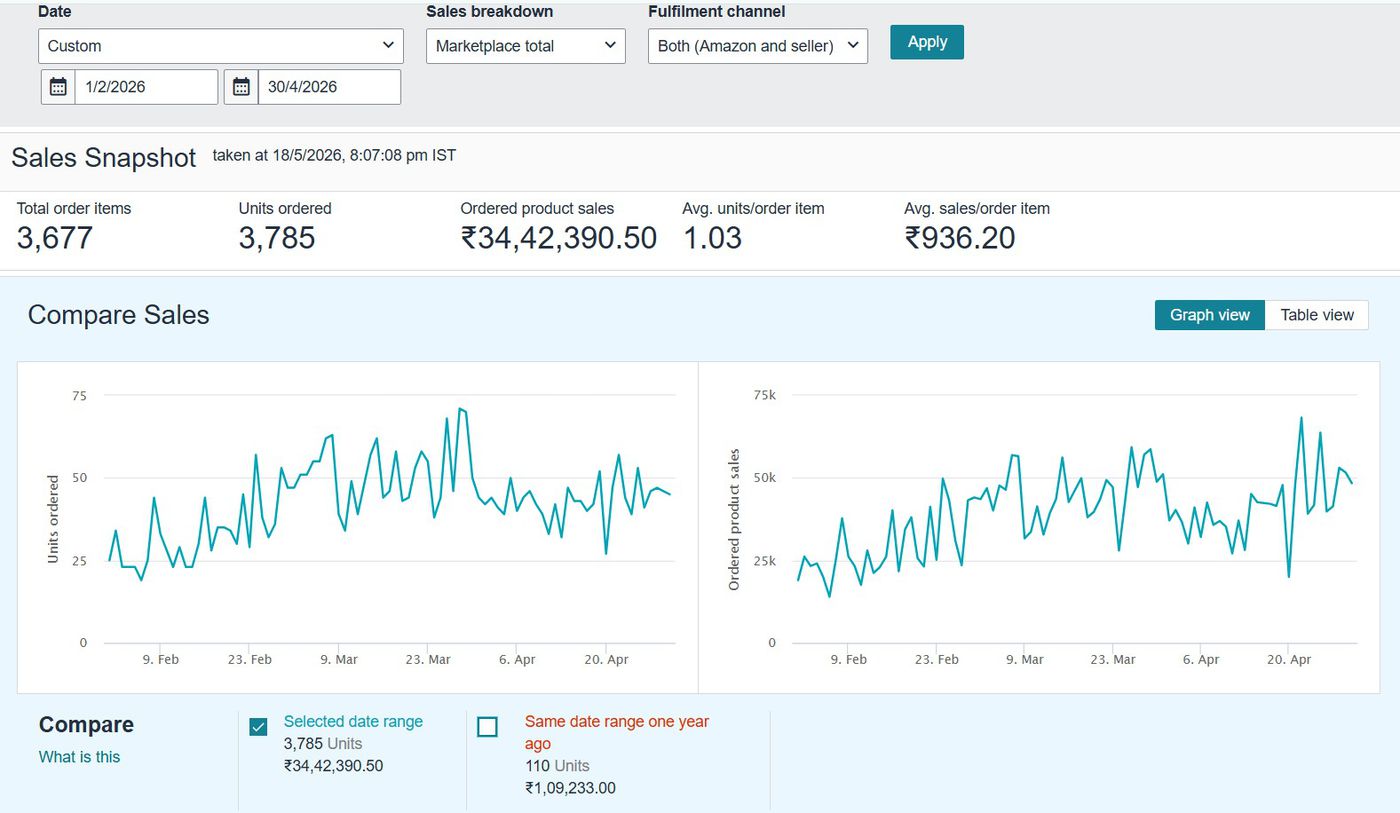
Sales snapshot for 1 Feb – 30 Apr 2026, compared with the same dates a year earlier.
Before
110 units · ₹1,09,233 in sales
After
3,785 units · ₹34,42,390 in sales
Source: Amazon Seller Central (India)
Inlife Pharma
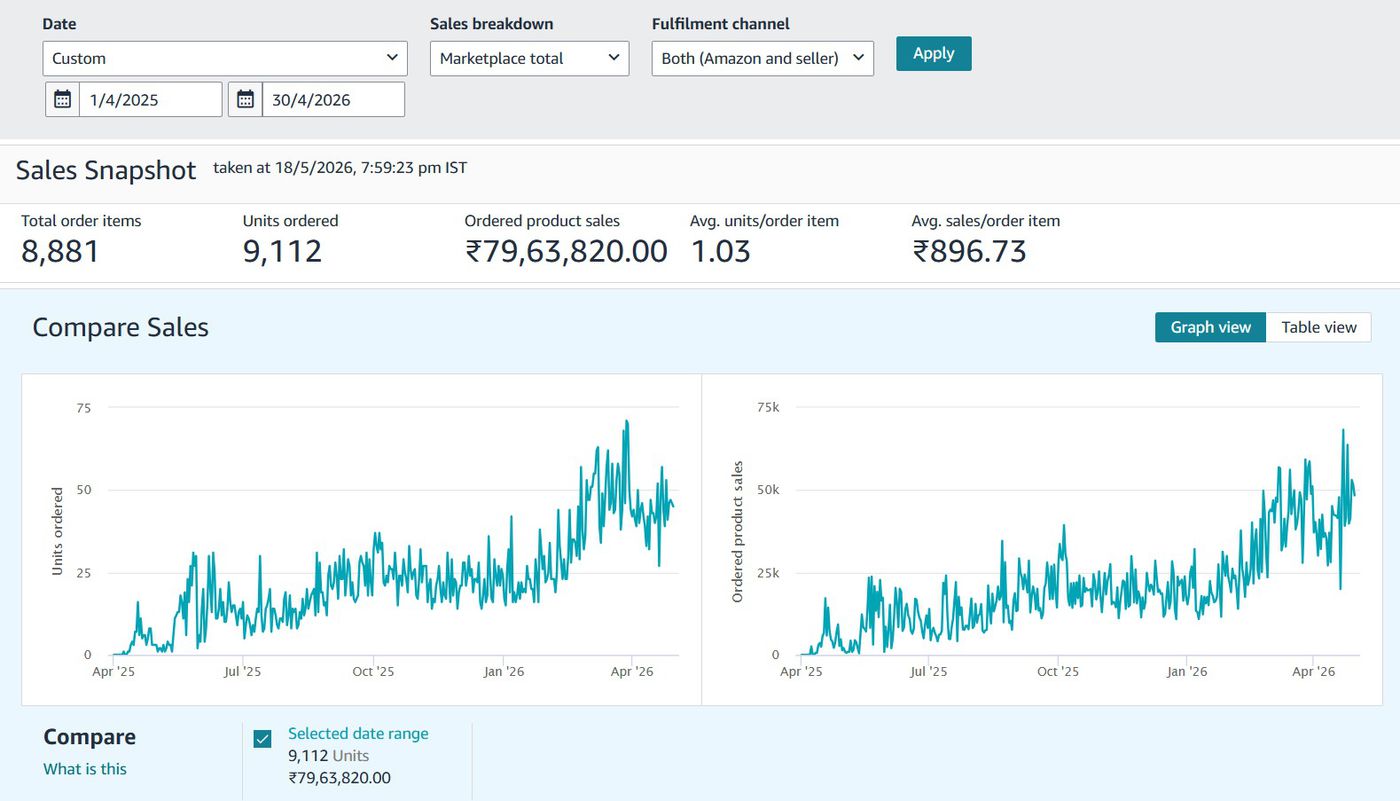
1 Apr 2025 – 30 Apr 2026: 9,112 units and ₹79,63,820 in ordered product sales. Daily sales grew from almost zero.
Source: Amazon Seller Central (India)
Inlife Pharma
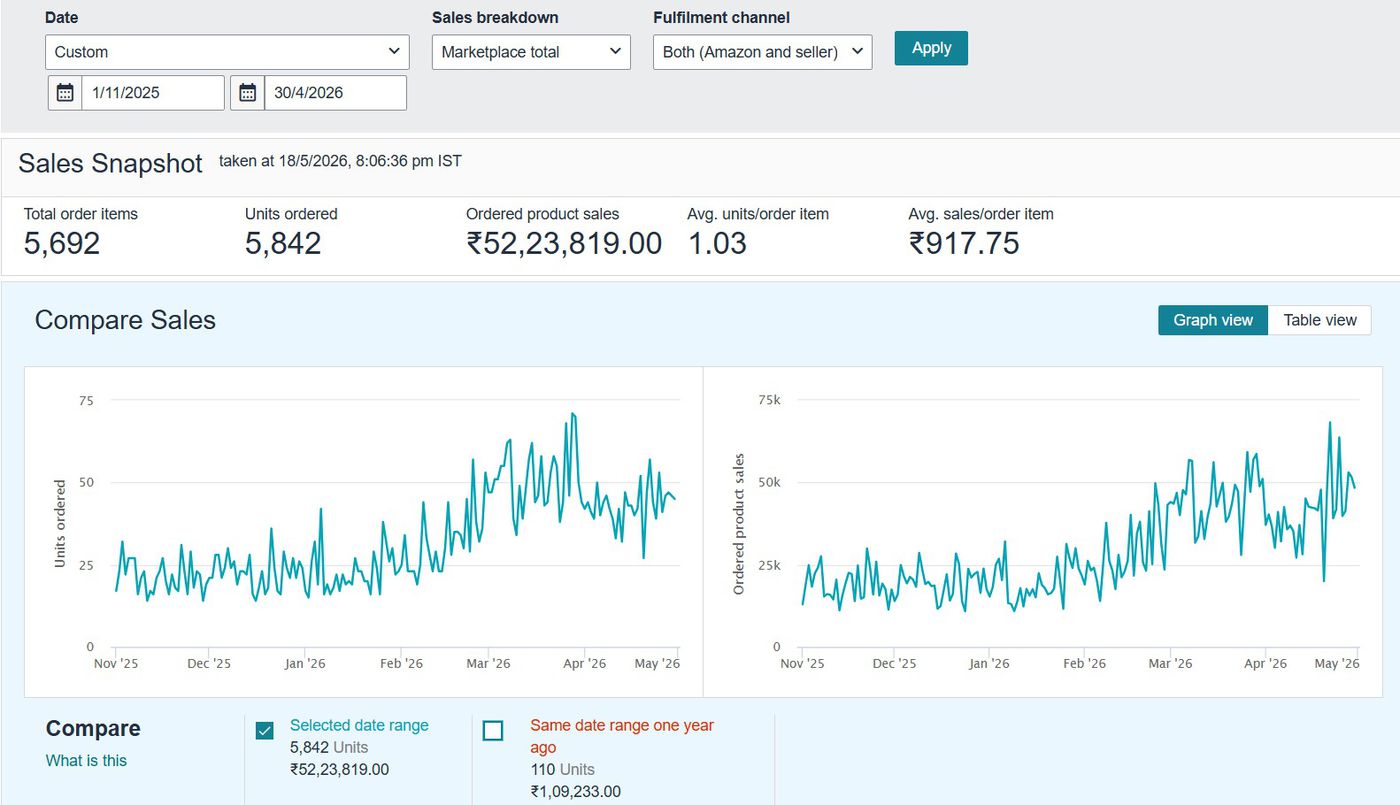
1 Nov 2025 – 30 Apr 2026: 5,842 units and ₹52,23,819 in ordered product sales.
Source: Amazon Seller Central (India)
FAQ
Sell on Multiple Marketplaces Services: questions
There is no fixed number. Most brands do better adding one channel at a time and getting it running well before adding the next. The right number depends on your team, catalog and margins.
Usually not, as long as your prices stay consistent. Amazon can suppress your featured offer if it finds your product cheaper elsewhere. We set pricing rules to avoid that.
With a few products, you can manage each channel by hand. Once you have many SKUs or channels, an inventory and listing tool prevents overselling. We help you choose one that fits your size and budget.
Amazon Multi-Channel Fulfillment can ship orders from other channels using your FBA stock. Some marketplaces do not allow Amazon-branded packaging or delivery, so we check each channel's rules first.
It depends on how many channels and SKUs we manage and whether we also run ads. We quote after reviewing your catalog and current setup.
Related services
Get a free Sell on Multiple Marketplaces Services proposal
Tell us about your business and goals. We'll reply with a plan and a price.